
China Is Turning VPN Use Into a National Security Offense
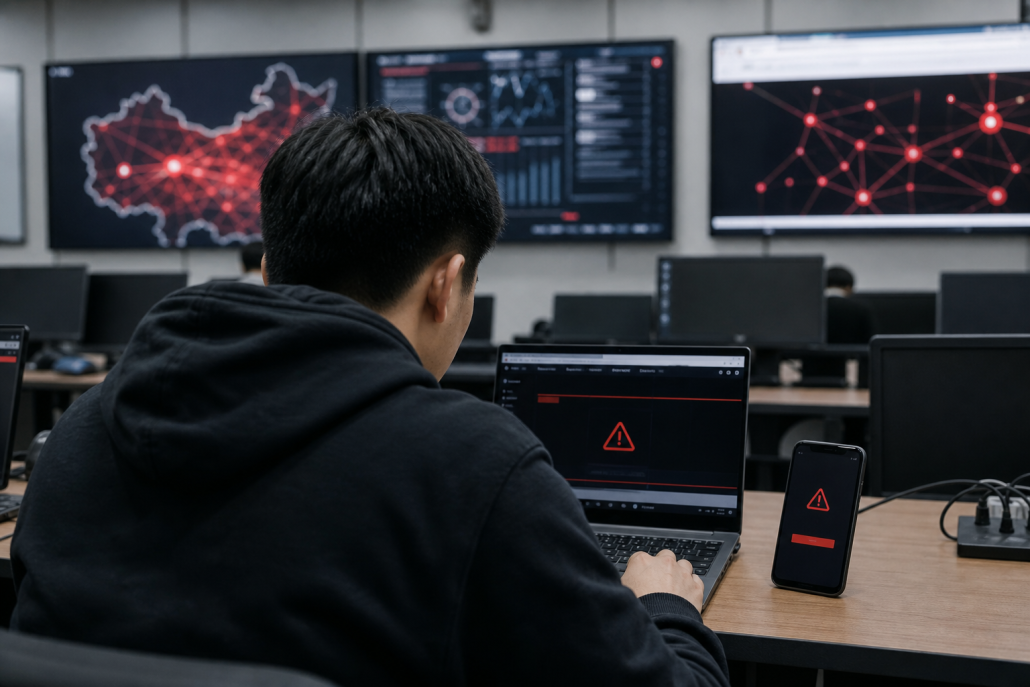
China’s latest anti-VPN campaign is moving beyond technical blocking. Recent reports point to a wider effort that includes university checks, police fines, carrier-level restrictions, and a draft cybercrime law that could formalize punishment for tools used to bypass the Great Firewall.
Summary
The latest lead came from a May 2026 post by the overseas Chinese account Teacher Li Is Not Your Teacher, known as @whyyoutouzhele on X. Direct access to the X post may vary by region and login status, so the post should be treated as a lead rather than a complete primary record.
The core claim has since been supported by reporting from Radio Free Asia. RFA reported on May 12, 2026, that multiple universities in Wuhan had begun checking whether students used VPNs or other circumvention tools, asking some students to explain their usage and sign written pledges not to use such software.
This is not an isolated campus rule. It fits a broader 2026 pattern: individual VPN users in Hubei have been fined, companies in some regions have reportedly been told to audit cross-border connections, and China’s Ministry of Public Security has released a draft Cybercrime Prevention and Control Law that rights groups say would expand censorship and surveillance powers.

Confirmed facts
RFA reported that screenshots circulating on overseas social media showed Wuhan campus notices asking students about VPN use, including the purpose, frequency, and whether they had visited overseas social media platforms. One notice reportedly warned that long-term browsing of overseas websites could create “ideological erosion” risks and national security dangers.
A student from Zhongnan University of Economics and Law told RFA that counselors had recently begun asking about VPN use in class groups. The student said some classmates used VPNs mainly for papers, academic materials, and AI tools, but feared disciplinary consequences.
RFA also reported that a campus police station had become involved in the checks. That detail matters. It suggests the issue is being moved from ordinary IT management into a security framework.
Separate cases in Hubei show that ordinary users are already being punished. China Digital Times archived reports of two March 11 administrative penalties: one man in Ezhou was fined 200 yuan after using Clash to access TikTok and X, while another internet user in Xiaogan was fined 500 yuan after police said he used a VPN to visit overseas websites.
Lingua Sinica, a China Media Project initiative, described the Hubei cases as a possible shift from targeting VPN operators to punishing individual users. The two men were reportedly given warnings and ordered to stop unauthorized international networking.
The legal direction
On January 31, 2026, China’s Ministry of Public Security released the draft Cybercrime Prevention and Control Law for public comment. State media said the draft was presented as a way to curb online crime and regulate related black-market services.
Human Rights Watch warned that the draft law goes much further than ordinary cybercrime enforcement. Its analysis says the bill would strengthen authorities’ ability to trace user activity across telecommunications, internet, and banking systems. HRW also said the draft would require service providers to help block illegal overseas information and would prohibit tools and services that enable people to obtain or spread such information.
The risk is clear: a tool used to read foreign news, search Google Scholar, open X, or access ChatGPT can be recast as part of a cybercrime ecosystem. Once that framing is written into law, punishment becomes easier to justify.
From the firewall to the classroom
China has blocked major foreign platforms for years. The new development is not simply that the Great Firewall still exists. It is that enforcement appears to be reaching deeper into schools, households, and service providers.
For students, this has a practical cost. Many foreign academic tools, journals, code repositories, search engines, and AI services are difficult or impossible to use normally from inside mainland China. A ban on circumvention does not only block political speech. It can also cut students off from research workflows that are routine elsewhere.
That is why the Wuhan reports are important. The notices described by RFA did not focus only on malware or fraud. They linked overseas websites to ideology, values, harmful information, and national security. The target is not only the tool. The target is the act of reaching information outside the approved domestic system.

Reported carrier and company measures
China Digital Times reported in April 2026 on documents that raised fears of a broader crackdown on circumvention infrastructure. One purported Ministry of Industry and Information Technology notice called for a meeting with China Telecom, China Mobile, and China Unicom on “unauthorized internet connections via dedicated cross-border data lines.”
Chinascope, summarizing the same CDT material, said reported documents pointed to a strict early-April campaign targeting cross-border internet access and VPN use. One reported notice connected to Shaanxi Telecom and a CDN provider allegedly ordered restrictions on overseas traffic and prohibited VPN or proxy-related services.
These documents remain partly unverified. But they match the direction of the public record: more pressure on users, more duties on network operators, and more political language around cross-border internet access.
Information risk
The X post and leaked campus screenshots should not be treated as official documents by themselves. Some details remain hard to verify because related posts, local police notices, or school messages may be deleted, hidden, or inaccessible from outside platform accounts.
Still, the pattern is supported by multiple source types: RFA interviews, archived Chinese-language screenshots, public reports of Hubei administrative penalties, state media coverage of the cybercrime draft law, and legal analysis by international rights and law organizations.
Why this matters
The campaign exposes the logic of China’s censorship system. The Great Firewall is no longer only a technical barrier between Chinese users and foreign platforms. It is becoming a behavioral control system, where access itself can trigger questioning, fines, pledges, school discipline, or future legal risk.
The official language is security. The practical effect is isolation. Students who need overseas academic material, workers who need global tools, and citizens who want uncensored information are all pushed into the same category: people whose curiosity must be reported, corrected, or punished.
That is the real message behind the recent crackdown. China is not only blocking websites. It is trying to make the desire to look beyond the wall feel dangerous.
Sources
- Teacher Li Is Not Your Teacher on X: original post used as lead
- Radio Free Asia: Wuhan universities check VPN use and ask students to sign pledges
- China Digital Times: Hubei VPN users fined 200 yuan and 500 yuan
- Lingua Sinica / China Media Project: No Scaling the Wall in Hubei
- China Digital Times: Documents raise fear of further crackdown on Great Firewall circumvention tools
- Chinascope: Documents on China’s crackdown on cross-border internet access and VPN use
- China News Service: Ministry of Public Security seeks comments on draft Cybercrime Prevention and Control Law
- Human Rights Watch: China cybercrime bill entrenches censorship and surveillance
- CMS: China releases draft law on preventing cybercrime for public comment
- China Media Project: AI Cop Signals VPN Crackdown


Leave a Reply
Want to join the discussion?Feel free to contribute!