
Fujian Bayberry Additive Scandal: Five Detained After Reports of Fruit Soaked in Illegal Preservatives
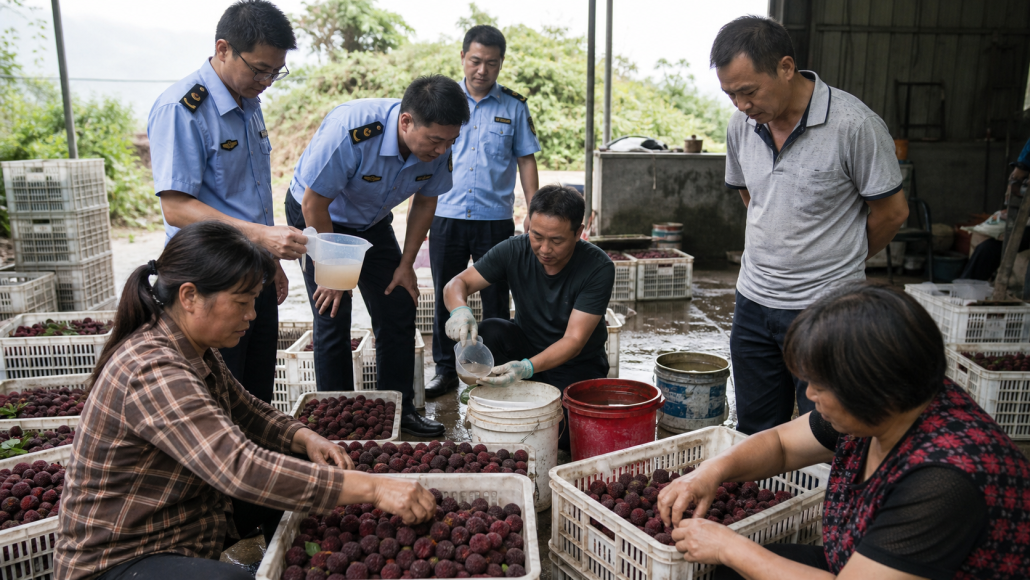
A food safety scandal in Zhangzhou, Fujian, has exposed how some bayberry collection points allegedly soaked fresh yangmei in illegal additives before shipping the fruit to market. Local authorities said five people had been criminally detained and 540 kilograms of problem fruit had been recovered and destroyed.
Summary
The latest public attention came from a May 21, 2026 post by the overseas Chinese account Teacher Li Is Not Your Teacher, known as @whyyoutouzhele on X. The post described the continuing backlash over what Chinese users called the “Fujian yangmei soaked in pesticides” incident and cited a long essay by a blogger involved in rural sales assistance projects.
The verified core of the story is narrower and stronger. Chinese state media and several mainland outlets reported that collection points in Longhai District, Zhangzhou, had used sodium dehydroacetate, a preservative, and suspected unlicensed high-intensity sweeteners to treat fresh bayberries. Fresh fruit is not an approved use category for those additives under China’s national food additive standard.
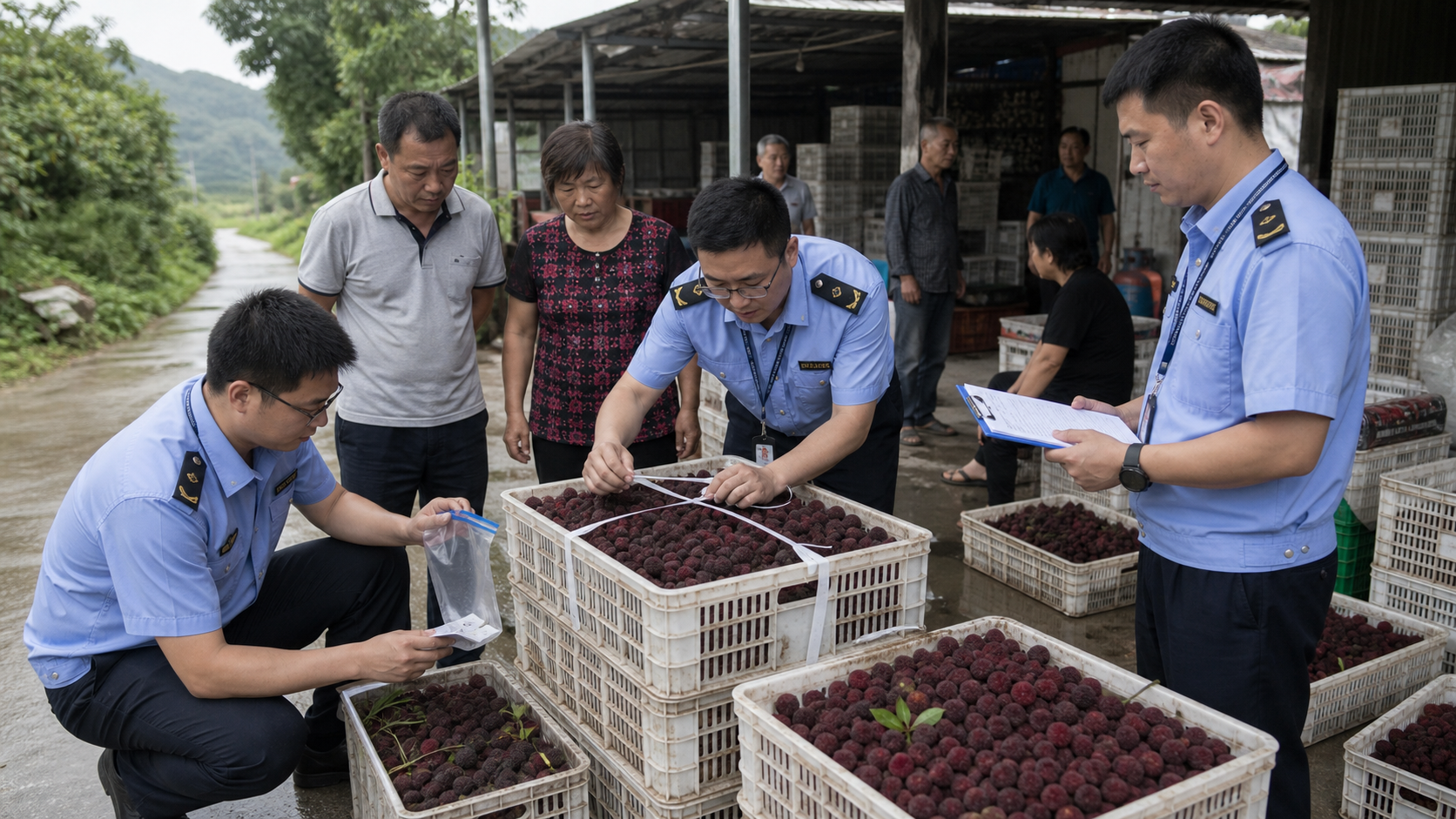
Zhangzhou’s Food Safety Commission Office said on May 20 that authorities had inspected the sites named in media reports, found five implicated collection points, filed administrative and criminal cases, detained five people, recovered 540 kilograms of problem bayberries, seized 20.1 kilograms of illegal additives, and destroyed the seized fruit and additives.
Confirmed facts
The incident centers on bayberry collection points in Fugong and Baishui, two producing areas in Longhai District, Zhangzhou, Fujian. Media reports published on May 15 alleged that some collection points soaked bayberries in liquids containing sodium dehydroacetate and compound sweeteners before shipping them onward.
CCTV reported that Zhangzhou authorities later checked the collection points named in the reporting. The official notice said the actual number of implicated collection points was five.
According to China News Service, the authorities said they had recovered 540 kilograms of problem bayberries, seized 20.1 kilograms of illegal additives, opened 12 administrative cases, opened two criminal cases, and criminally detained five people. The seized fruit and additives were destroyed.
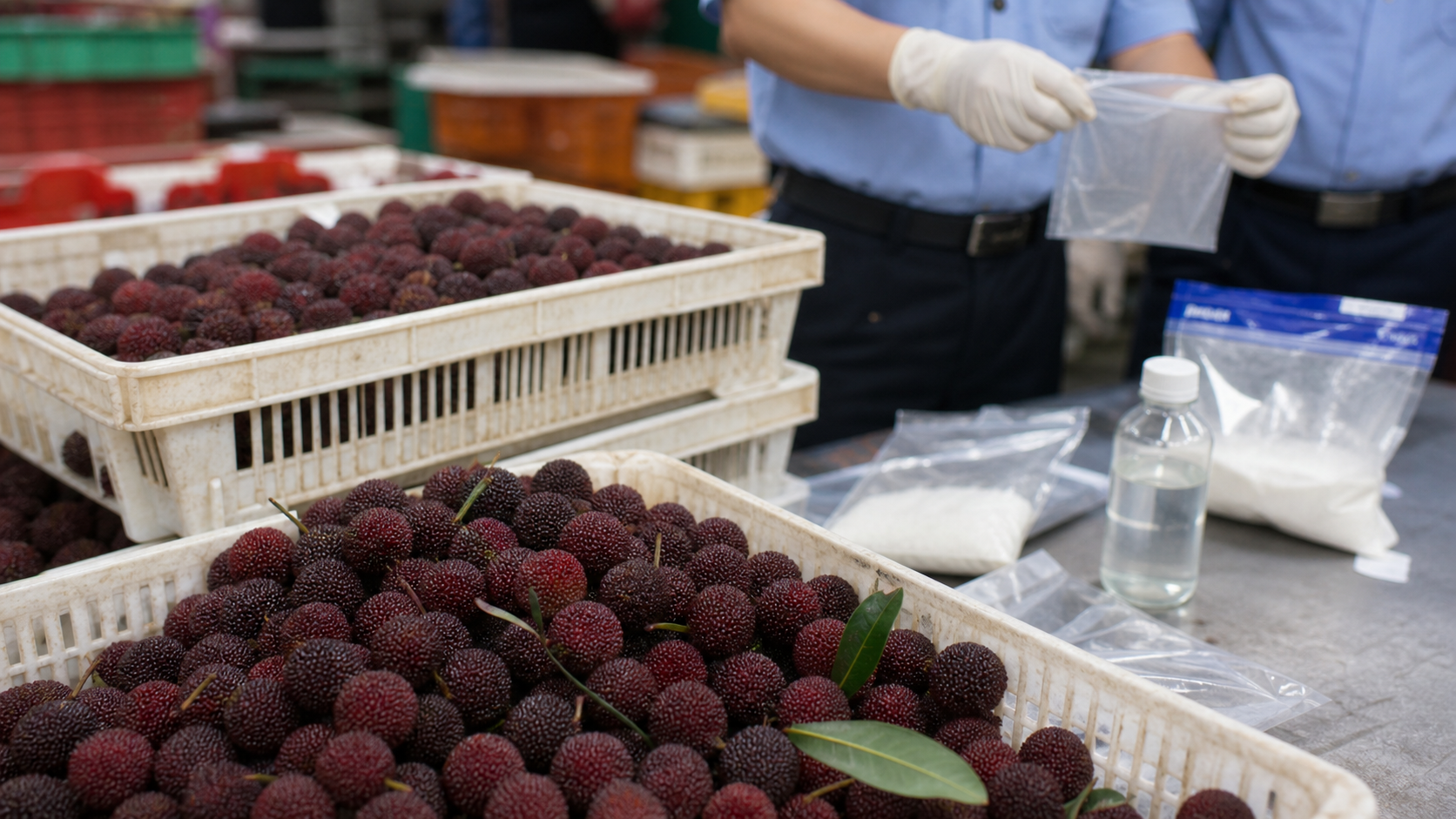
Caixin reported that journalists had visited more than ten collection sites in Longhai District and found the use of sodium dehydroacetate and suspected unlicensed sweetener products. The practice was presented locally as a way to preserve fruit and improve taste before distribution.
Why sodium dehydroacetate matters
Sodium dehydroacetate is a food preservative. The issue is not simply whether the chemical exists in the food industry. The issue is whether it is used in the approved food category, at the approved level, and for a lawful purpose.
China’s National Health Commission and State Administration for Market Regulation released GB 2760-2024, the national food safety standard for food additive use, in 2024. The standard took effect on February 8, 2025. Chinese media cited the standard in explaining that sodium dehydroacetate, saccharin sodium, and sodium cyclamate are not allowed for fresh fruit.
That distinction matters for readers outside China. A legal food additive can still become illegal when sellers use it outside its permitted scope. In this case, officials and media described the problem as the illegal treatment of fresh bayberries, not as ordinary packaged food production.
The rural commerce angle
The X post that drew attention on May 21 focused on a long essay by the blogger “San Shaoye de Jian” about his years in rural sales assistance work. That essay appears to have resonated because it challenged a popular online image of farmers as naturally honest and vulnerable.
Those claims should be handled carefully. A personal essay can describe one person’s experience, but it cannot prove what happened across an entire industry or region. The verified record supports a more limited conclusion: several collection points in one Zhangzhou district were accused of illegal additive use, and local authorities later announced criminal and administrative enforcement.
The wider debate is still worth noting. China’s online economy has spent years promoting “help farmers” campaigns, livestream sales, and rural authenticity as marketing language. When a food safety scandal hits a product sold through that emotional frame, public anger can move quickly from one batch of fruit to broader distrust of rural supply chains, e-commerce claims, and local oversight.
What remains unverified
The phrase “soaked in pesticides” has spread on social media, but the strongest public reporting so far centers on illegal food additives: sodium dehydroacetate and suspected unlicensed compound sweeteners. This article uses “additive scandal” in the title for that reason.
There is no public evidence yet showing the full distribution chain for all affected fruit. Authorities said they recovered 540 kilograms and destroyed the problem batches. That does not by itself prove whether any treated fruit had already reached consumers, wholesale markets, or e-commerce buyers before the recall.
There is also no reliable public evidence proving that the practice was common across all Fujian bayberry producers. The official statement named five implicated collection points after checking the reported sites. Treating that as proof of a province-wide practice would overstate the record.
Information risk
This case has two information layers. The first layer is official and reportable: media investigations, the Zhangzhou notice, detentions, seized additives, recovered fruit, and destroyed batches. The second layer is social media commentary about farmers, rural morality, and China’s agricultural marketing culture.
The second layer is politically and emotionally charged. It can expose public distrust, but it can also turn one food safety case into a sweeping claim about farmers or rural China. That would be a mistake. The better reading is institutional: perishable fruit, thin margins, weak traceability, local collection points, and uneven enforcement create room for illegal shortcuts.
China’s censorship environment adds another risk. Domestic reporting can disappear or soften after local authorities issue a notice. Social media posts can amplify claims faster than journalists can verify them. For now, the most reliable facts are the enforcement figures released by Zhangzhou and the details reported by CCTV, China News Service, Caixin, and People’s Daily.
Potential impact
For consumers, the immediate issue is trust. Bayberries are seasonal, fragile, and often sold through short supply chains. Buyers usually cannot see whether a batch has been treated before it reaches a fruit stand or delivery box.
For honest growers and sellers, the damage can be wider than the seized batches. A local scandal can depress demand for the product category, punish producers who did not cheat, and make buyers suspicious of legitimate rural sales campaigns.
For Chinese regulators, the case raises a basic question: whether enforcement happens before the fruit is shipped, or only after media expose the practice. The Zhangzhou response was fast after the reports spread. The harder question is why collection points could allegedly use illegal additives in the first place.
Sources
- Teacher Li Is Not Your Teacher on X: original social media lead
- CCTV News: Zhangzhou reports five criminal detentions and 540 kilograms of problem bayberries recovered
- China News Service: Fujian Zhangzhou responds to the “soaked bayberry” incident
- Caixin: Zhangzhou notice and media investigation details
- People’s Daily: Official notice on the Fujian Zhangzhou bayberry case
- CCTV News: Consumer guidance on buying and eating bayberries
- National Health Commission: Announcement releasing GB 2760-2024 and other national food safety standards


Leave a Reply
Want to join the discussion?Feel free to contribute!