
A Viral Teacher Li Post Linked Gaokao to Delivery Work. What China’s Job Data Actually Shows
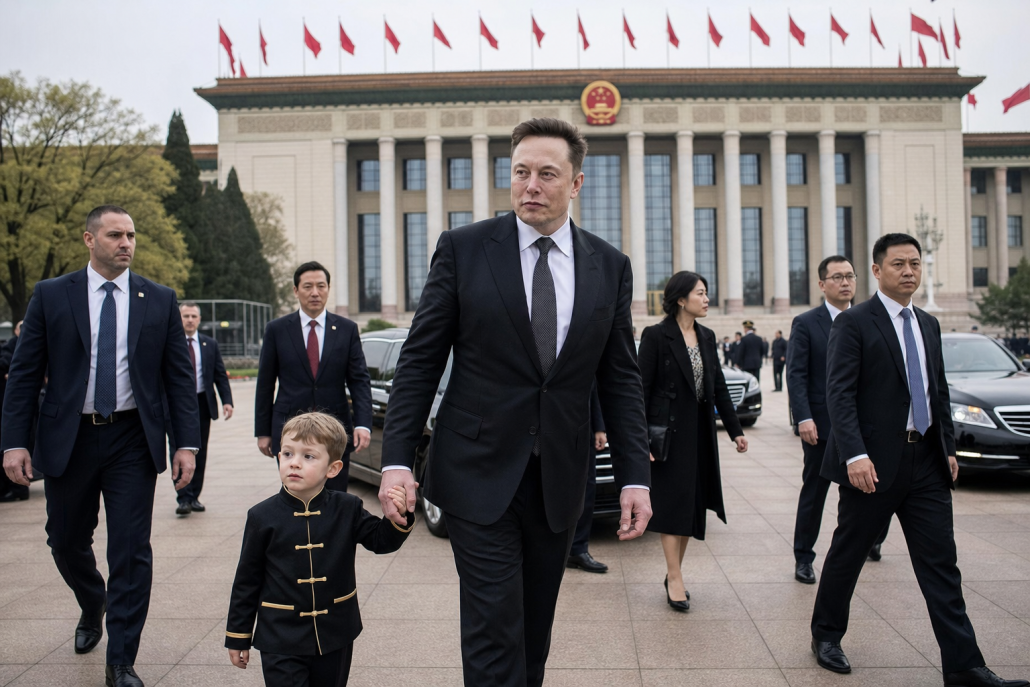
A recent Teacher Li post from June 8 drew strong engagement with a short, bitter line: “Now it’s gaokao. After the exam, food delivery.” The post paired that slogan with a clip of a delivery rider and followed a June 7 post that cited a controversial meme-style image from “Youth Voice,” a platform linked to the Communist Youth League. The social media material moved quickly because it compressed a broader fear into a single image. In today’s China, many students still treat the gaokao as a life-defining exam, while many families can also see that graduation no longer guarantees a stable white-collar job.
Summary
The viral posts are recent and easy to see. The harder question is what can actually be verified.
What is confirmed is that the 2026 gaokao began on June 7 and involved 12.9 million candidates, according to Chinese state media and official education reporting. It is also confirmed that the Ministry of Education launched a new “100-day sprint” employment campaign on June 8 for the 2026 graduating class, and that Beijing is still trying to stabilize a weak youth job market. Official labor data showed urban unemployment for 16- to 24-year-olds excluding students at 16.3 percent in April. China has also spent recent months issuing new protections for gig workers, including delivery riders, which is its own sign that platform work has become too large and too economically important to ignore.
What is not fully verified is the most viral detail in the Teacher Li thread: whether a Communist Youth League-linked account really published the exact slogan “Fail the exam, deliver food in four days; pass the exam, deliver food in four years” before it disappeared, and whether the rider’s sign in the circulating clip was spontaneous, staged, or edited. Those claims should be treated carefully.
Confirmed facts
June 7 was the first day of this year’s national college entrance examination, or gaokao. People’s Daily Online, citing official figures, reported that 12.9 million students sat for the exam in 2026. Reuters photo coverage from Beijing on the same day showed the usual heavy exam-day scenes outside schools.
The broader employment backdrop is also clear. China’s Ministry of Education said on June 8 that it was launching a “100-day sprint” action for the 2026 graduating class from June through August. The ministry said the campaign is meant to help graduates secure jobs during the critical period before and after leaving campus. That is not a symbolic move. It is an admission that many graduates still need help finding work.
The scale of that pressure is large. Xinhua reported in November 2025 that China expected about 12.7 million college graduates in 2026, up from 12.22 million in 2025. In other words, one huge class is taking the gaokao while another huge class is already moving into the labor market.
Official labor data adds more context. Reuters reported in May that China’s April unemployment rate for urban 16- to 24-year-olds excluding students was 16.3 percent. That was lower than March, but still high enough to keep employment anxiety front and center for students and families.
The state has also been paying more attention to platform labor. In late April, Chinese authorities issued new guidelines to better protect workers in “new forms of employment,” explicitly including food delivery couriers. That matters because delivery work is no longer a niche side job. It has become a visible fallback option, a transitional job, and for some people a long-term occupation.
Source verification
The selected Teacher Li post is recent, within the last two days, and had the strongest visible engagement among the latest timely posts surfaced in search results. At capture time, the June 8 post about the rider slogan showed about 64 visible replies, 17 reposts, and 297 likes, plus roughly 62,000 views.
That post is useful as a lead. It is not enough by itself to prove every attached claim.
The rider clip can be described as circulating widely on June 8 through Teacher Li’s account. The broader gaokao and employment context can be verified through official and mainstream sources. But I was not able to locate a preserved official page from “Youth Voice” that independently confirms the exact meme image quoted in the thread. Search results preserve the claim, but that is weaker than a live page, an archive capture, or a mainstream report quoting the original post directly.
So the verification line is straightforward:
- The Teacher Li post and its engagement are verifiable as a recent social lead.
- The gaokao timeline and candidate count are verifiable through official and mainstream reports.
- The graduate employment push is verifiable through the Ministry of Education.
- The youth job market pressure is verifiable through official statistics carried by Reuters.
- The exact viral slogan attributed to a Youth League-linked account remains only partly verified.
- I could not independently verify that the exact “four days / four years” delivery slogan was posted by the original Youth Voice account before deletion.
- I could not verify from public records whether the rider’s sign in the clip was self-made, staged for the camera, or digitally altered.
- I could not verify whether the rider in the video was commenting on his own work situation, making a joke, or repeating a meme that was already circulating.
- [Teacher Li post on X](https://x.com/whyyoutouzhele/status/2063898826117906636)
- [People’s Daily Online: Gaokao begins with 12.9 million candidates](https://en.people.cn/n3/2026/0608/c90000-20464795.html)
- [Reuters Connect photo coverage of gaokao in Beijing](https://www.reutersconnect.com/item/the-annual-national-college-entrance-exam-or-gaokao-starts-in-beijing/dGFnOnJldXRlcnMuY29tLDIwMjY6bmV3c21sX1JDMlJPTEEwQUJPNQ)
- [Ministry of Education notice on the 2026 graduate employment “100-day sprint”](https://www.moe.gov.cn/jyb_xwfb/gzdt_gzdt/s5987/202606/t20260608_1439860.html)
- [China Daily summary of the new graduate employment drive](https://global.chinadaily.com.cn/a/202606/08/WS6a26861aa310d6866eb4d0db.html)
- [Xinhua on the expected 12.7 million college graduates in 2026](https://english.news.cn/20251120/3277566206e4490e94d9632d2bc5d409/c.html)
- [Reuters via Investing: China’s April youth jobless rate dipped to 16.3%](https://www.investing.com/news/economic-indicators/chinas-youth-jobless-rate-rises-to-169-in-march-4625011)
- [State Council / Xinhua release on protections for gig workers, including delivery riders](https://english.www.gov.cn/policies/latestreleases/202604/27/content_WS69eebfacc6d00ca5f9a0aa4e.html)
Background
This story landed because it joined two pressures that many Chinese families already understand.
The first is educational pressure. The gaokao still shapes access to universities, cities, and career tracks. Even in a much larger higher-education system, it remains one of the most consequential exams in the country.
The second is labor-market pressure. China has spent years trying to absorb record graduate classes into an economy that no longer produces enough attractive entry-level jobs at the pace families expect. When authorities launch repeated recruitment campaigns, pressure state firms and internet companies to hire, and publicly adjust policy for riders and other gig workers, they are responding to a structural problem, not a brief social-media mood swing.
That is why the delivery-rider image resonated. It did not need to be statistically precise to feel plausible. It connected exam-season ambition to the fear of downward mobility.
Unverified claims
Several claims in the viral thread remain unconfirmed or only partly confirmed.
Those limits matter. The social post is still newsworthy because of what it captured and how people reacted. But the line between a verified incident and a viral symbol should stay clear.

Potential impact
Short term, this is an optics story about what people are willing to believe during gaokao season. That alone is telling.
For Chinese policymakers, the risk is not one rider with one slogan. The risk is that exam-season messaging about hope and upward mobility keeps colliding with a job market that looks more crowded and less predictable. That tension is visible enough that even ambiguous social media clips can travel far.
For outside readers, the point is not that every graduate will end up delivering food. The point is that delivery work has become a common enough symbol of constrained opportunity that a single sentence can carry national meaning.
Information risk
This article has a mixed evidence base.
The strongest parts are the gaokao timeline, official candidate count, recent employment policy moves, and youth unemployment data. Those are well supported.
The weakest part is the viral social-media claim about the exact slogan and its original source. That portion should be read as partly verified and still open to further confirmation.


Leave a Reply
Want to join the discussion?Feel free to contribute!