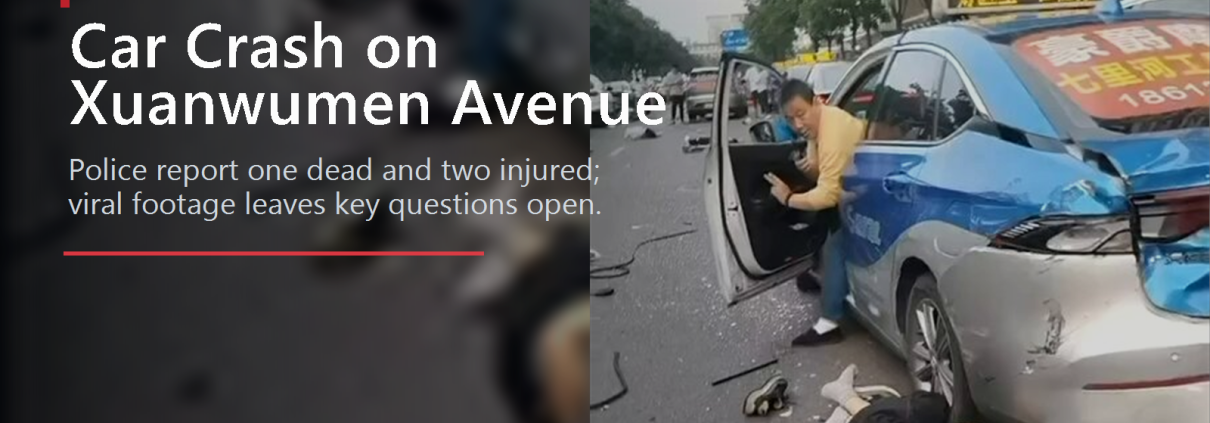
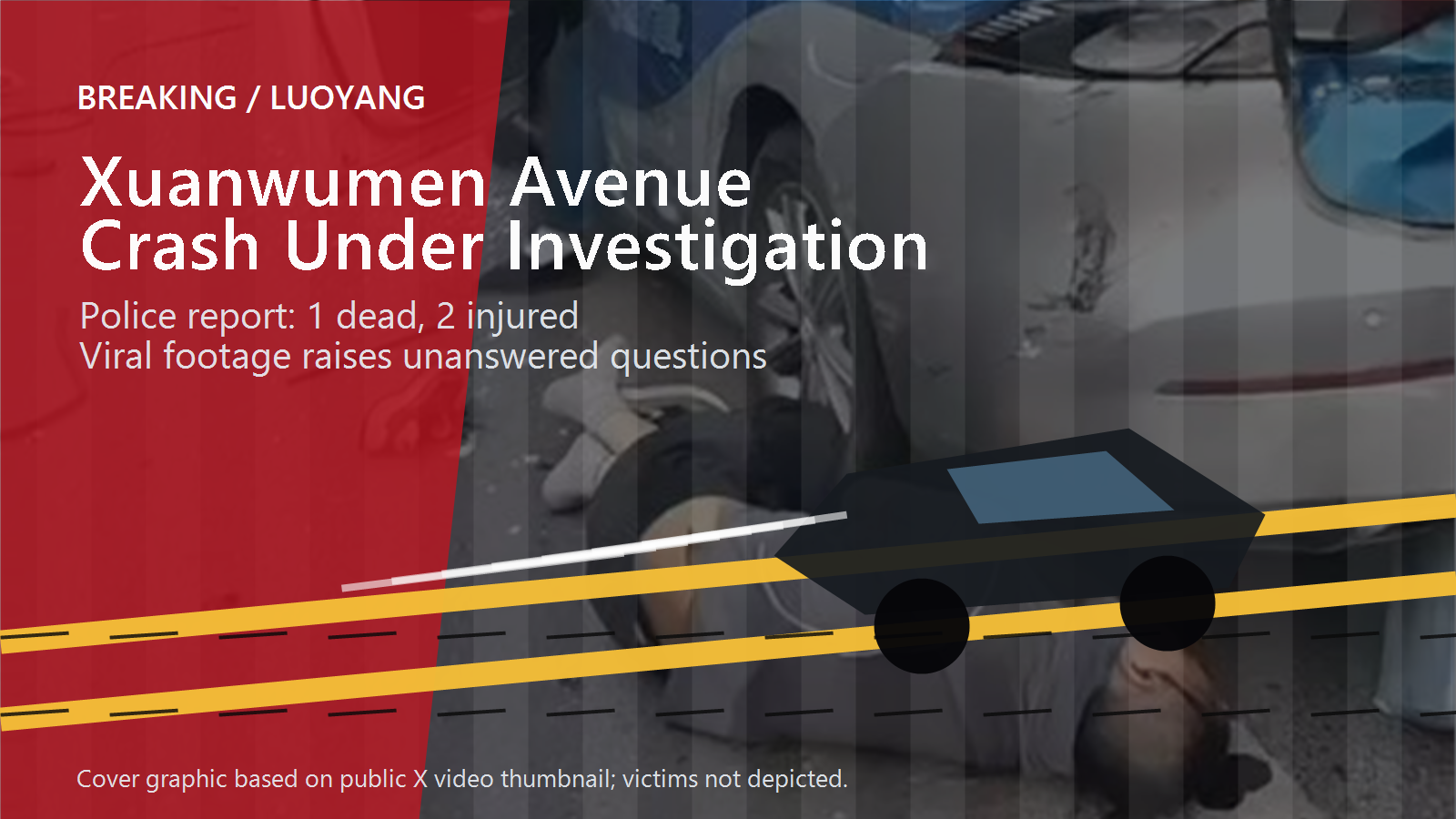
Police in Luoyang, Henan province, say a 49-year-old driver was detained after a May 15 crash on Xuanwumen Avenue left one person dead and two others injured. Viral Chinese-language videos raised wider public concern, but the available official account describes the case as a traffic accident under investigation.
Summary
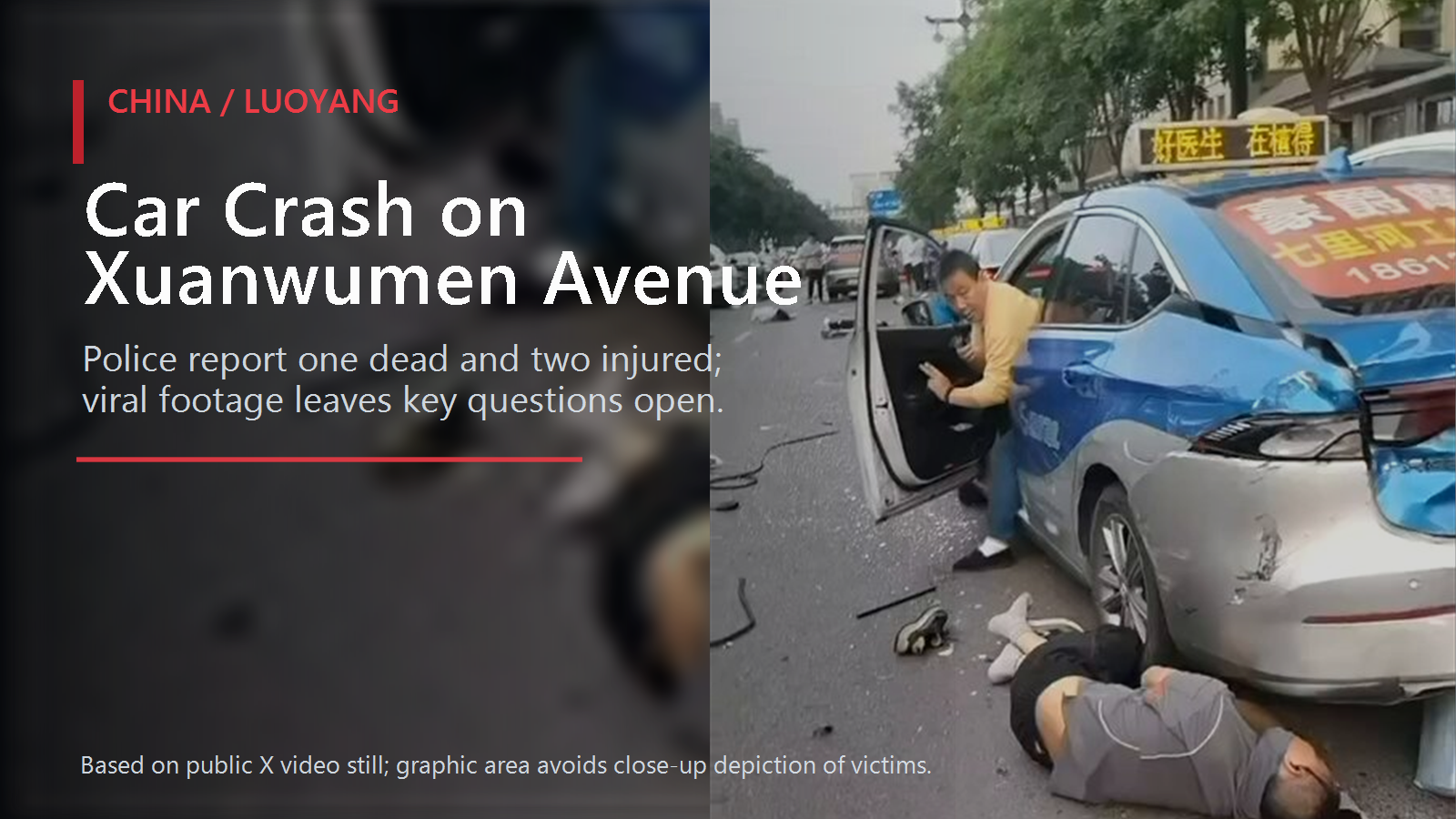
A road incident in Luoyang, central China, drew attention after Chinese-language videos circulated on X/Twitter showing a vehicle striking people and vehicles on Xuanwumen Avenue. The post by the account “Teacher Li Is Not Your Teacher” described a car suddenly accelerating toward pedestrians. A police notice later said the driver, identified as Zhu Mouqiang, rear-ended an electric three-wheeler and an electric two-wheeler before losing control.
The most reliable confirmed information remains limited: one person died, two people were injured, four small cars were damaged, and the driver was controlled at the scene. Police said alcohol and drug-driving suspicions had been ruled out, while the cause and legal responsibility remain under investigation.
Confirmed Facts
- The incident occurred at about 7 p.m. on May 15, 2026, in Xigong District, Luoyang, Henan province.
- Luoyang traffic police said the vehicle was traveling along Xuanwumen Avenue before colliding with an electric three-wheeler and an electric two-wheeler, then losing control.
- The official police notice reported one death, two injuries, and damage to four small cars.
- The driver was identified by police as Zhu Mouqiang, male, 49.
- Police said the driver was detained at the scene and that alcohol and drug-driving suspicions had been excluded.
- The case remains under official investigation.
Source Verification
The initial public attention came from a Chinese-language X post that included video footage and described the vehicle as suddenly accelerating toward a crowd. That post is useful as a lead and as evidence of public concern, but it does not by itself establish motive, intent, or the full sequence of the crash.
The key confirmed details come from a police notice attributed to the Luoyang Public Security Bureau Traffic Police Detachment and republished by Chinese media outlets including CCTV, Sina, and Hainan Daily’s news site. New Tang Dynasty Television also reported on circulated videos and public discussion, but its framing goes beyond the official account and should be read separately from confirmed police information.
Background
Vehicle-ramming incidents and severe road crashes in Chinese cities have become especially sensitive topics online because some past cases involved deliberate attacks, while others were officially classified as ordinary traffic accidents. In this case, the available police statement does not confirm an intentional attack. It states that the car lost control after rear-end collisions and that the investigation is ongoing.
This distinction matters. The videos may appear alarming, and the public reaction is understandable, but a responsible account should separate what is visible in footage from what investigators have established.
Unverified Claims
- The claim that the vehicle intentionally accelerated into pedestrians has not been confirmed by police.
- The driver’s motive, if any, has not been verified.
- The full number of people struck in the circulated videos cannot be independently confirmed from the available sources.
- Any claim that this was a deliberate social-retaliation attack remains unverified unless authorities or reliable independent reporting provide evidence.
Potential Impact
The incident is likely to reinforce public anxiety around urban safety, traffic enforcement, and the reliability of official narratives after violent-looking public incidents. It also shows the role of Chinese-language social media outside China in surfacing local events that may otherwise receive limited national attention.
For readers outside China, the main point is not to treat either the viral footage or the official notice as complete on its own. The footage raises questions; the police statement provides the current official baseline; the unresolved issue is whether further investigation will clarify why the vehicle moved as it did.
Information Risk
- Video-context risk: short clips can omit events immediately before or after the crash.
- Official-narrative risk: Chinese police notices often provide limited detail in early stages and may not answer public questions about intent.
- Attribution risk: naming the driver is based on the police notice; no independent court document is available yet.
- Casualty-update risk: the death and injury count may change if authorities release later information.
Sources
- CCTV: Henan Luoyang traffic accident leaves one dead and two injured
- Sina: Luoyang traffic accident report
- NTD: Report on circulated video and police notice
Editorial note: This article is based on information available as of May 16, 2026. It will require updating if Luoyang police, hospitals, courts, or credible media release additional verified details.